Views: 0 Author: Site Editor Publish Time: 2026-05-25 Origin: Site
Is range anxiety holding you back, or do you crave total charging freedom? A Portable EV Charger acts like a "portable gas station," ensuring you never get stranded. In this guide, we explore its pros, cons, and real-world value to help you decide if it is a must-have tool for your electric journey.
● Versatility: Portable chargers function as a "mobile fuel tank," allowing you to charge from any standard wall outlet (Level 1) or high-powered industrial socket (Level 2).
● Cost-Effective: They offer a budget-friendly alternative to expensive fixed wallbox installations, saving users thousands in electrical labor and permits.
● Emergency Backup: Having one in your trunk serves as an essential insurance policy against broken public infrastructure or power grid failures.
● Performance: While Level 1 charging is slow (3-5 miles per hour), a 240V portable unit can provide 15-30 miles per hour, meeting most daily driving needs.
● Durability: High-quality units feature IP66 weatherproofing and robust safety certifications (UL/CE), making them reliable for long-term daily use.
The primary draw of a portable unit is its sheer flexibility. Unlike a fixed home station, these devices turn any reachable outlet into a refueling point. Whether you are visiting a relative’s house, staying at a remote Airbnb, or parked at a workplace without dedicated EV spots, the ability to "plug in and chill" changes the ownership experience. It effectively removes the rigid dependency on public fast-charging networks.
Installing a hardwired home station often requires a licensed electrician, city permits, and potentially a costly panel upgrade. These "soft costs" can easily exceed $2,000. In contrast, a portable charger is a plug-and-play solution. If you already have a high-voltage outlet (like a dryer plug) in your garage, you can achieve Level 2 speeds for the price of the hardware alone, which typically ranges from $300 to $800.
We must address the elephant in the room: speed. A basic Level 1 portable charger (120V) is slow, adding only about 3 to 5 miles of range per hour. It is best suited for overnight "trickle" charging. However, many modern portable units are "dual-voltage." When connected to a 240V NEMA 14-50 outlet, they can deliver up to 7.7kW or 9.6kW, rivaling many fixed wallboxes.
Think of a portable charger as your roadside assistance in a box. Public charging stations are notoriously prone to downtime or long queues. If you arrive at a station and find it "Out of Order," a portable unit allows you to limp to a nearby hotel or shop to gain enough juice to reach the next working charger. It is the ultimate peace of mind for road trips.
Fixed units stay on the wall, protected from movement. Portable chargers, however, endure constant handling, coiling, and exposure to different environments. This leads to physical stress on the connectors and cable housing. Buyers should look for units with high-quality TPU (Thermoplastic Polyurethane) cables that remain flexible in the cold and resist cracking.
Many high-end portable chargers now offer Wi-Fi or Bluetooth connectivity. While these features allow you to track energy costs or schedule charging during "off-peak" hours to save money, they add to the price. For many users, a simple "dumb" charger that just works when plugged in is more reliable and less prone to software glitches.
Feature | Portable EV Charger | Fixed Wallbox Station |
Installation | Plug-and-play | Hardwired (Professional) |
Mobility | Take it anywhere | Permanent location |
Max Speed | Up to 9.6 kW (Level 2) | Up to 11.5 - 22 kW |
Cost | $300 - $900 | $600 - $1,500 + Labor |
Note: Always check if your vehicle's trunk has a dedicated storage compartment for a portable charger to prevent it from sliding around and sustaining impact damage during travel.
The "speed" requirement is often overstated. The average American drives about 30–40 miles per day. If you plug in a Level 1 portable charger for 10 hours overnight, you recover nearly 40 miles. For many, this "trickle charge" covers their entire daily commute without ever needing a faster solution.
If you find Level 1 too slow, upgrading to a 240V outlet is a game-changer. By using a NEMA 14-50 or 6-20 outlet, your Portable EV Charger becomes a high-speed tool. It can fully recharge most long-range EVs in 8 to 12 hours, making it a viable primary charging solution for the home.
It is important to remember that the car, not the charger, ultimately dictates the speed. Every EV has an onboard charger with a maximum kilowatt (kW) limit. If your car is capped at 7.2kW, buying a 40A (9.6kW) portable charger won't make it charge any faster. We recommend checking your vehicle's manual to match the charger's output to your car's intake capacity.
Note: Charging speeds typically slow down significantly once the battery reaches 80% to protect the chemical health of the cells.
When we look at the numbers, the portable option is the clear winner for budget-conscious owners. A high-quality portable unit costs a fraction of a hardwired installation. For renters or those planning to move soon, the "sunk cost" of a permanent installation is a major deterrent. Portable units move with you, preserving your investment.
While the unit itself is affordable, don't forget the extras. To make a Portable EV Charger truly universal, you may need a set of adapters (NEMA 5-15, 14-50, 10-30). Quality adapters cost $30–$60 each. Additionally, you should inspect the plug blades periodically for signs of "pitting" or heat damage, as loose outlets can cause resistance and melting.
Public DC Fast Chargers often charge a premium, sometimes 2x to 4x the cost of residential electricity. By using your portable charger at home or at work, even at slower speeds, you bypass these markups. Over a year, a driver who relies on home-based portable charging can save $500–$1,200 compared to someone relying on commercial stations.
Expense Item | Portable Charger Setup | Fixed Station Setup |
Hardware | $400 | $700 |
Installation | $0 (if outlet exists) | $1,200 (Average) |
Maintenance | Low (Cable checks) | Low (Software updates) |
Total Year 1 | $400 | $1,900 |
Tip: Check with your local utility company; many offer rebates or tax credits for "Energy Star" certified portable chargers, further reducing your initial cost.
Safety is non-negotiable. Because these units handle high voltage for hours on end, you must look for "Nationally Recognized Testing Laboratory" (NRTL) marks like UL (Underwriters Laboratories) or ETL. These certifications ensure the device has passed rigorous fire and shock hazard testing. Avoid "no-name" generic chargers that lack these stamps.
If you plan to charge in your driveway, the IP (Ingress Protection) rating matters. Look for at least an IP66 rating, which means the unit is dust-tight and protected against powerful jets of water (heavy rain). Never leave the "plug-to-wall" connection exposed to standing water, even if the charger itself is waterproof.
Modern chargers act as a smart bridge between the grid and your car. They monitor for "leaking" current (GFCI protection) and will instantly shut off if they detect a short circuit. High-end models also include thermal sensors in the wall plug to detect if the household outlet is overheating, preventing a potential fire before it starts.
Note: A "ground fault" error often indicates an issue with the building's wiring, not necessarily a fault in the charger itself.
If you live in an apartment, your landlord might refuse to let you install a permanent station. A Portable EV Charger allows you to use existing outdoor outlets or shared garage power without making permanent modifications to the property. It is the only way many urban dwellers can practically own an EV.
Outside of major highways, "charging deserts" still exist. If you enjoy camping or visiting national parks, a portable charger is your lifeline. Most RV parks offer NEMA 14-50 outlets (50-amp service) or TT-30 outlets, allowing you to wake up with a full battery even in the middle of nowhere.
If you have a Plug-in Hybrid (PHEV) or a secondary EV used only for errands, a portable charger is almost always sufficient. There is no financial logic in spending $2,000 to install a high-speed station for a car that only has a 30-mile battery. A simple portable unit is the perfect "set it and forget it" solution here.
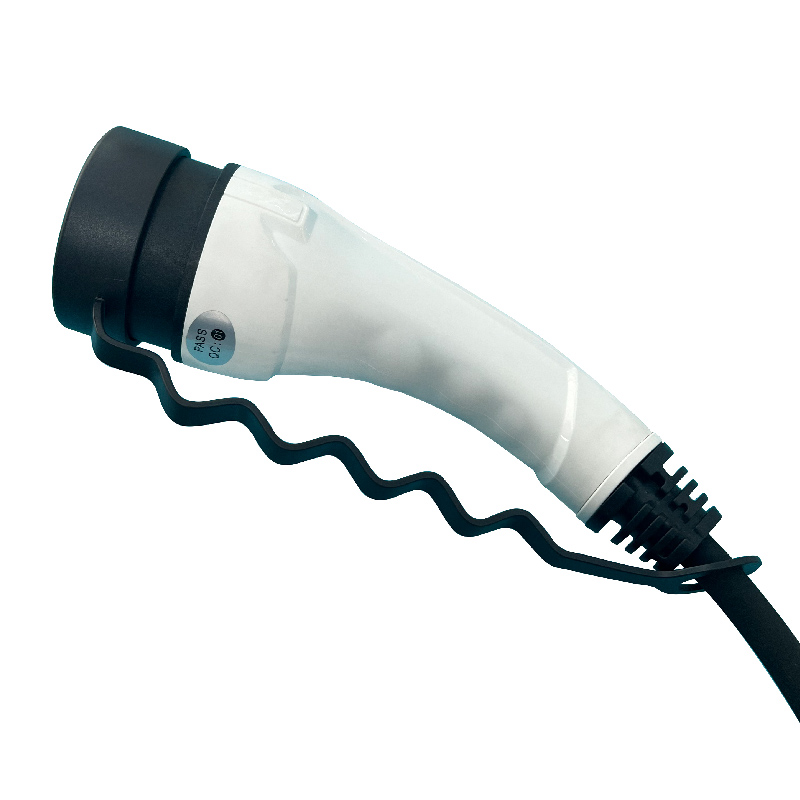
In North America, the J1772 (Type 1) is the standard for almost all non-Tesla EVs. If you drive a Tesla, you can use a J1772 charger with the adapter that came with your car, or buy a portable charger with a native North American Charging Standard (NACS) plug. In Europe, the Type 2 (Mennekes) plug is the standard.
A 32-amp charger provides about 7.7kW of power. This is considered the "sweet spot" because it is fast enough to charge most cars overnight but doesn't require the ultra-heavy-duty wiring that 40A or 48A chargers demand. It strikes the best balance between portability (weight of the cable) and performance.
Standard cables are usually 16 to 25 feet long. We strongly recommend a 25-foot cable. Parking isn't always perfect, and having that extra reach ensures you aren't struggling to stretch a heavy cable across your car's hood or blocking a walkway.
Tip: Choose a cable made of TPU rather than PVC. TPU stays flexible in freezing temperatures, making it much easier to coil and store in the winter.
Deciding on a Portable EV Charger depends entirely on your lifestyle and daily driving habits. It functions as a "portable gas station," offering unmatched peace of mind for road trips and rural travel. While it may not match the raw speed of some hardwired units, its versatility and low cost make it a superior choice for renters and commuters. For those seeking reliability and high-quality engineering, hmhipech provides durable charging solutions tailored for the modern driver. By choosing hmhipech, you ensure your vehicle stays powered through advanced safety features and robust hardware. This essential tool belongs in every EV owner’s trunk to guarantee you are never truly out of fuel.
A: Yes, a certified Portable EV Charger includes the same safety protections as a wallbox, such as ground-fault and over-temperature sensors.
A: Most units are IP66 rated, meaning a Portable EV Charger can safely handle rain, but the wall outlet connection must stay dry.
A: A Portable EV Charger adds 3-5 miles per hour on 120V, or 15-30 miles per hour on a 240V outlet.
A: Most use the J1772 standard, making the Portable EV Charger compatible with nearly every EV via the correct adapter or plug.