Views: 0 Author: Site Editor Publish Time: 2026-09-03 Origin: Site
Commercial electric vehicle infrastructure represents a massive, capital-intensive investment. Hardware failure, poor utilization, or software lock-in severely degrades project viability. When you deploy charging stations at scale, you build a decentralized fueling network. This requires industrial-grade equipment capable of withstanding extreme weather, continuous high-load electrical draw, and constant user interaction.
Procuring this infrastructure involves navigating extended lead times, strict grid capacity constraints, and complex federal funding requirements. You also face a highly fragmented ecosystem. The companies building the physical stations are often different from the network operators managing the software. Choosing the wrong EV charger manufacturer often leads to stranded assets, proprietary ecosystem traps, and frustrated end-users.
This technical evaluation examines the top five manufacturers. We focus heavily on hardware reliability, protocol interoperability, and actual deployment realities to guide your procurement decisions.
Hardware vs. Network: Distinguish between hardware manufacturers and Charge Point Operators (CPOs) or software platforms (e.g., ChargeLab, EV Connect); emphasize that decoupling hardware from software via open standards prevents vendor lock-in.
Protocol Compliance: Highlight that Open Charge Point Protocol (OCPP) 1.6J or 2.0.1 compliance is a non-negotiable baseline for any commercial EV charging manufacturer.
Dwell Time Dictates Hardware: Note that selecting a DC EV charger manufacturer versus a Level 2 specialist depends entirely on site dwell times, tenant needs, and available electrical infrastructure.
Financial Evaluation: Emphasize that upfront capital expenditure (CapEx) is secondary to operational expenditure (OpEx) driven by uptime, maintenance SLAs, and software licensing fees.
Public and fleet charging stations endure brutal conditions on site. Enclosure ratings dictate how well a unit survives its environment. You must specify NEMA 3R or NEMA 4 enclosures for outdoor deployments. NEMA 3R protects against falling dirt, rain, sleet, and snow. NEMA 4 goes further, offering a watertight seal against windblown dust and direct hose-directed water, which is necessary if maintenance crews pressure-wash the parking lot. For high-traffic public areas, IK impact ratings matter just as much. An IK10 rating ensures the casing withstands significant blunt force. We frequently see snowplows throw heavy ice chunks into pedestals, or drivers back into the units. IK10 protects the sensitive internal power electronics from these impacts.
Thermal management separates standard units from industrial-grade hardware. Continuous high-load operation generates immense heat inside the power cabinets. If a station cannot shed this heat, the internal sensors automatically derate the power output to prevent melting the busbars. A charger rated for 150kW might drop to 50kW on a hot summer day, frustrating drivers and extending charge times. Advanced liquid-cooling systems, particularly in the charging cables, are mandatory for any unit pushing 350kW or more. Air-cooled systems work for lower capacities, but they require robust, filtered intake fans. You must schedule regular filter replacements, or dust accumulation will choke the airflow and trigger thermal shutdowns.
Hardware is useless if it fails to communicate flawlessly with your chosen management software. The Open Charge Point Protocol (OCPP) acts as the universal language between the physical station and the cloud backend. A reliable commercial EV charging manufacturer provides native support for OCPP 1.6J at a minimum. This allows you to connect the hardware to third-party billing, energy management, and access control platforms. Upgrading to OCPP 2.0.1 introduces enhanced device management, stronger cryptographic security, and better transaction handling.
Proprietary ecosystems pose a massive operational risk. If you buy hardware locked to a single software provider, you lose all leverage. If their customer service declines or their network experiences downtime, you cannot migrate your stations to a different platform. You are stuck. Furthermore, you must verify ISO 15118 readiness. This standard enables Plug & Charge functionality. It allows the vehicle and the charger to authenticate and initiate a session automatically via secure digital certificates. This completely bypasses RFID cards, mobile apps, and credit card readers, which are notorious points of failure in the field.
Federal funding programs like the National Electric Vehicle Infrastructure (NEVI) formula program strictly dictate hardware origins. To qualify for these funds, you must select equipment that complies with Build America, Buy America (BABA) provisions. This requires final assembly to occur in the United States and mandates that at least 55% of the component parts originate domestically. Manufacturers with established North American assembly lines offer a distinct advantage here. They insulate buyers from overseas shipping delays, customs holds, and port strikes.
Hardware breaks in the field. When a power module fails, your Service Level Agreement (SLA) determines how long your asset remains offline. Evaluate the manufacturer's local support infrastructure before signing a purchase order. Do they warehouse spare parts domestically? Do they maintain a certified installer network in your specific region? A robust warranty means nothing if the replacement liquid-cooled cable takes six months to ship from an overseas factory. You need a vendor capable of dispatching a technician with the correct parts within 48 hours.
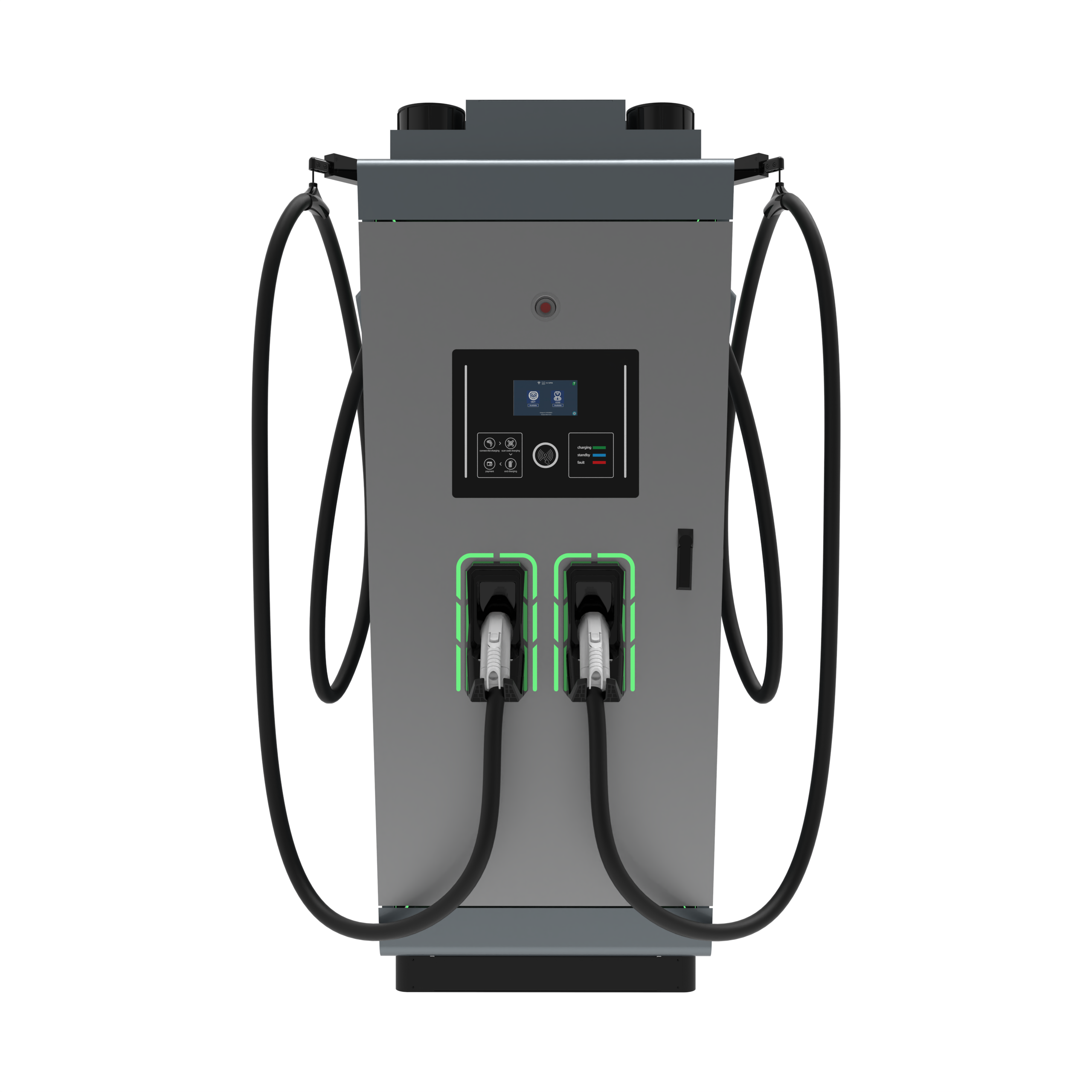
HMHipech supplies AC chargers, integrated DC fast chargers, compact DC units, and split charging systems for commercial, public, workplace, and fleet applications. Its product range covers 7–14 kW AC chargers, compact 40 kW DC models, integrated DC chargers at multiple power levels, and higher-capacity split charging stacks.
As an EV charger manufacturer, HMHipech presents R&D, sheet-metal processing, spray-molding, assembly, and production capabilities. Its commercial EV charger range provides options for different charging capacities and installation scenarios.
The company may be considered by distributors, charging-station operators, fleet projects, and commercial buyers that require adjustments to appearance, branding, connector configuration, or system functions. Before ordering, buyers should confirm charging standards, input power, communication protocols, local certification, software integration, installation responsibility, and after-sales arrangements.
ABB dominates the high-voltage infrastructure sector. They leverage decades of experience in grid-scale power management to build some of the most robust fast-charging stations available. Their engineering focuses heavily on continuous, heavy-duty cycles rather than lightweight commercial use. When you open an ABB cabinet, you see industrial-grade contactors and heavy-gauge copper busbars designed for maximum uptime.
Their Terra series represents the benchmark for modular power architecture. You can configure these units from 50kW up to 360kW and beyond. The Terra 360 utilizes dynamic power allocation. It distributes current across multiple dispensers based on the real-time demand of connected vehicles. They also offer liquid-cooled cable options. These keep the heavy high-voltage cables manageable for everyday drivers while sustaining peak power delivery.
This hardware suits highway corridor charging, heavy-duty transit fleets, and high-turnover retail hubs. Transit agencies rely on ABB for pantograph charging and depot solutions because the equipment handles the massive electrical draw of electric buses without thermal throttling.
However, deploying ABB hardware requires serious electrical engineering. The grid upgrade requirements are substantial. You will likely need dedicated medium-voltage transformers and extensive switchgear modifications. Installation logistics demand specialized high-voltage contractors. You must pour deep concrete pads to support the weight of the power cabinets and run large-diameter Schedule 80 PVC conduit for the DC lines.
ChargePoint operates as a fully integrated EV charger supplier and network operator. They design the hardware, write the firmware, and manage the cloud backend. This vertical integration creates a highly polished, user-friendly experience for both the site host and the driver.
Their CT4000 Level 2 series is ubiquitous in commercial real estate. It features built-in cable management retractors, customizable video displays, and robust power-sharing capabilities. The retractors keep cables off the ground, preventing trip hazards and protecting the connectors from snowplows. For faster applications, their Express Plus DCFC platform uses a modular power block design. You install the heavy power cabinets away from the parking spaces and route the power to sleek, footprint-friendly dispensers at the stalls.
Corporate campuses, hospitality venues, and multi-unit dwellings (MUDs) benefit immensely from this ecosystem. The backend dashboard provides granular control over access policies. Hosts can restrict charging to employees or tenants during specific hours and set custom billing rates based on user groups.
The primary risk lies in ecosystem lock-in. While they offer high reliability, you are tied to their proprietary network. If you decide to change your software management platform in the future, migrating ChargePoint hardware to a third-party OCPP network is technically challenging and sometimes contractually restricted. You must weigh the convenience of a turnkey system against the loss of long-term software flexibility.
Siemens approaches electric vehicle infrastructure from a facility-wide energy perspective. As a comprehensive EV charging solution provider, they excel at tying charging stations into broader Building Energy Management Systems (BEMS) and industrial microgrids.
The VersiCharge Level 2 units provide reliable, heavy-duty AC charging with native Modbus TCP communication. This allows facility managers to control the chargers directly through existing industrial control systems. Their SICHARGE D series offers dynamic load management. It intelligently routes power between multiple DC dispensers based on grid capacity and building load limits.
Industrial facilities, logistics hubs, and large university campuses are the ideal environments for Siemens hardware. They integrate seamlessly with solar arrays and Battery Energy Storage Systems (BESS). If your site requires the chargers to ramp down automatically when the factory's heavy machinery powers up, Siemens provides the necessary hardware-level controls. We often use Siemens when the client wants to implement aggressive peak shaving strategies to avoid utility demand charges.
The downside is complexity. Siemens hardware is often over-engineered for simple, standalone deployments. A standalone retail parking lot does not need Modbus integration or microgrid controllers. Deploying their advanced features requires sophisticated integration partners, specialized electrical engineers, and custom programming.
Tesla aggressively expanded its commercial offering, driven by the industry-wide adoption of their North American Charging Standard (NACS). They are transitioning from a closed, proprietary network to a universal infrastructure provider for commercial real estate.
The Universal Wall Connector is a standout product for Level 2 applications. It features an integrated magic dock mechanism. This allows it to charge both NACS and J1772 vehicles natively without loose adapters. You can daisy-chain up to six units on a single electrical circuit, and the hardware automatically shares the available amperage. For fast charging, their commercial Supercharger deployment models allow site hosts to bring industry-leading uptime to their properties.
Destination charging locations like hotels, restaurants, and retail centers use Tesla hardware to attract the largest current demographic of EV drivers. The brand recognition alone drives utilization. The hardware is sleek, highly reliable, and benefits from over-the-air firmware updates directly from Tesla.
Implementation risks involve backend control nuances. Tesla maintains strict control over the user experience. Site hosts have limited flexibility for custom branding on the physical units or the user interface. Historically, integrating Tesla hardware into third-party loyalty apps or custom billing networks has been restrictive. You operate within their walled garden.
Manufacturer | Main Product Focus | Suitable Commercial Applications | Points to Confirm |
|---|---|---|---|
HMHipech | AC, integrated DC and split charging systems | Public charging, fleets, distributors and customized projects | Standards, certification, software integration and customization |
ABB E-mobility | High-power DC and fleet charging | Highway sites, fleet depots and high-throughput stations | Grid requirements, power allocation and local service |
ChargePoint | Networked Level 2 and commercial charging | Workplaces, retail, multifamily and municipal parking | Software fees, network terms and data access |
Siemens | DC charging and electrical-system integration | Industrial sites, public stations and energy-managed facilities | Engineering integration, commissioning and support |
Tesla | Destination and commercial AC charging | Hotels, restaurants, workplaces and retail properties | Connector compatibility, management functions and regional support |
Procuring the hardware from an EV charging equipment supplier represents only a fraction of your total project budget. The physical site preparation dictates the bulk of your CapEx. You must account for extensive trenching through existing asphalt, directional boring under sidewalks, laying heavy-gauge conduit, and pouring specialized concrete pads. High-power DC fast chargers require massive electrical clearances and specific bollard placements to protect the equipment from vehicle impacts. You also face significant utility connection fees and potential switchgear upgrades.
OpEx factors heavily into long-term viability. You must budget for monthly networking fees, payment processing transaction costs, and preventative maintenance contracts. Cellular connectivity is another ongoing expense. Commercial chargers rely on 4G LTE or 5G modems to communicate with the cloud backend. If you install these units in an underground parking garage or a remote industrial park with poor reception, you must pay for dedicated hardwired Ethernet runs or commercial Wi-Fi networks to ensure continuous uptime.
Utility interconnection timelines represent the largest bottleneck in commercial deployments. Upgrading a site to handle multiple DC fast chargers often requires a new medium-voltage pad-mount transformer. Utilities frequently quote lead times of 12 to 24 months for these transformers due to global supply chain shortages. You must engage your local utility company before you finalize your hardware orders to conduct a comprehensive load study.
To mitigate these delays, implement dynamic load balancing software. This technology monitors the real-time electrical draw of your building using CT clamps installed at the main breaker. When the building load is low, it directs maximum power to the chargers. When the building load spikes, it automatically throttles the chargers down. This allows you to install more charging ports on your existing electrical panel without triggering a massive utility upgrade.
You can also phase your deployment. Follow these steps to minimize upfront delays:
Install the underground conduit and pull strings for the maximum future capacity during the initial trenching phase.
Deploy a smaller number of chargers that fit within your current electrical panel limits.
Select hardware with adjustable amperage output, allowing you to dial down the power via dip switches or software.
Increase the power output and add more dispensers later once the utility completes the necessary grid upgrades.
Choosing a commercial EV charger manufacturer should begin with your project’s operating requirements rather than brand recognition alone. You should compare the available electrical capacity, vehicle dwell time, required charging speed, connector standards, software compatibility, local certification, installation conditions, and long-term technical support.
No single manufacturer is suitable for every commercial charging project. The right choice depends on how well the equipment and service model match your site. HMHipech provides AC, integrated DC, and split charging systems for different commercial applications. If you need a tailored configuration, you can contact HMHipech to discuss your power requirements, charging standards, software integration, and project conditions.
A: A manufacturer designs and builds the physical hardware, including the power electronics, enclosures, and cables. A Charge Point Operator manages the network. The CPO provides the cloud software, handles user authentication, processes billing, and monitors the real-time status of the stations. Some companies do both, while others specialize strictly in hardware or software.
A: The choice depends entirely on user dwell time. Level 2 stations provide AC power and take several hours to charge a vehicle, making them ideal for workplaces, hotels, and apartments where cars park for long periods. DCFC stations bypass the vehicle's onboard charger to deliver rapid power, suiting highway corridors, fast-food restaurants, and heavy-duty fleet depots.
A: The Open Charge Point Protocol (OCPP) ensures interoperability. It allows hardware from one company to communicate with software from another. Strict OCPP compliance prevents vendor lock-in, giving you the freedom to switch network management platforms in the future without having to rip out and replace your expensive physical charging stations.
A: ABB and Siemens are highly regarded for heavy-duty fleet applications. They build industrial-grade power cabinets designed for continuous, high-voltage output. Their hardware supports advanced thermal management and integrates well with depot energy management systems, ensuring transit buses and logistics trucks receive reliable power without thermal derating.
A: If you utilize federal NEVI funding, your hardware must meet BABA standards. This requires the final assembly of the charging station to occur in the United States. Additionally, at least 55% of the cost of the components must be manufactured domestically. You must verify these certifications directly with the manufacturer before procurement.
A: Lead times vary significantly based on hardware type and supply chain conditions. Standard Level 2 commercial units typically ship within 4 to 8 weeks. High-capacity DC fast chargers often require 12 to 24 weeks. However, the longest delays usually stem from utility transformer upgrades, which can take over a year.
A: Most hardware manufacturers do not perform the physical installation directly. Instead, they maintain networks of certified electrical contractors. You purchase the hardware from the manufacturer or a distributor, and a specialized local electrical firm handles the trenching, conduit runs, panel upgrades, and physical mounting of the stations.