Views: 0 Author: Site Editor Publish Time: 2026-10-26 Origin: Site
Typical investment: A commercial battery energy storage system (BESS) for a mid-sized building generally costs $300–$600 per kWh installed, with most commercial projects landing between $100,000 and $1,000,000 depending on capacity and power electronics.
Three revenue streams: Demand charge reduction, time-of-use (TOU) energy arbitrage, and backup power resilience — most commercial projects stack two or three of these.
Payback period: Well-designed projects in high-demand-charge markets typically achieve 4–8 year payback, with 10+ year system lifespans (6,000+ cycles for LiFePO4 chemistry).
EV charging synergy: Pairing a BESS with DC fast chargers can cut demand charges by up to 60% and avoid expensive utility upgrades.
Sizing matters: Oversizing is the #1 cause of poor ROI. Start with 12 months of interval data before choosing capacity.
Ten years ago, battery storage was a demonstration technology. Today it is a financial instrument. Lithium-ion prices have fallen roughly 80% since 2015, utility demand charges keep climbing, and grid reliability is deteriorating in many markets. For commercial building owners — offices, hotels, retail centers, factories, and logistics hubs — the question is no longer whether battery storage works, but whether it works for your specific load profile.
This guide breaks down real-world costs, the revenue streams that actually pay, and the math you should run before signing any contract. If you are also planning EV charging infrastructure, pay special attention to the section on pairing storage with commercial EV chargers — it is one of the strongest use cases in the market right now.
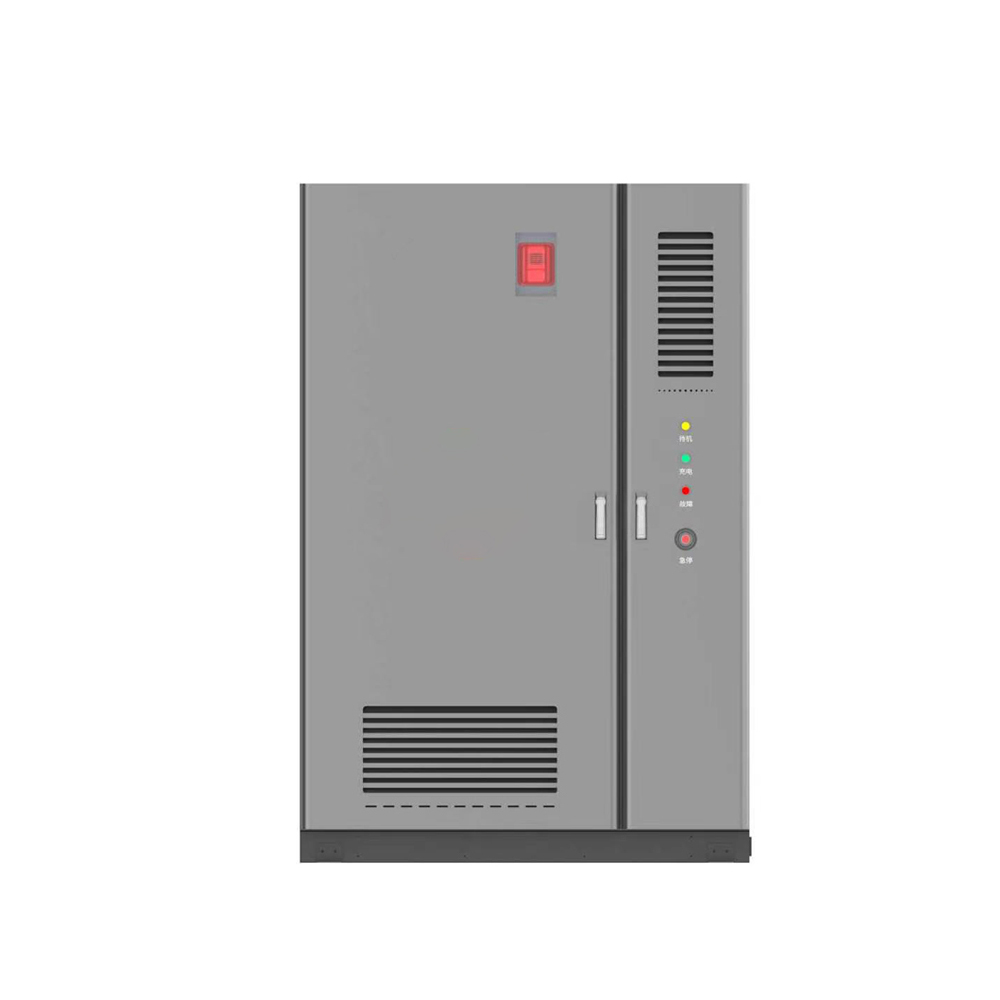
A commercial BESS is a rechargeable battery bank — almost always lithium iron phosphate (LiFePO4) in modern installations — combined with a power conversion system (PCS), a battery management system (BMS), thermal management, and an energy management system (EMS). The whole assembly is typically housed in an outdoor-rated cabinet or container.
Battery modules (LiFePO4): The energy reservoir. Commercial-grade LFP cells are rated for 6,000–8,000 cycles at 80% depth of discharge — roughly 10–15 years of daily cycling.
Power Conversion System (PCS): Converts DC battery power to AC and back. Sized in kW; determines how fast the system can charge and discharge.
Battery Management System (BMS): Monitors cell voltages, temperatures, and state of charge; keeps the pack in its safe operating window.
Energy Management System (EMS): The brain. It forecasts load and prices, then decides when to charge, discharge, or idle.
Modern outdoor cabinets integrate all four into a single unit. For example, a commercial-grade BESS cabinet rated 100–2000 kWh can support a full day of load shifting for a mid-size commercial building or a full day of DC fast charging at a highway station. (For a deeper look at enclosure types, see our guide to outdoor BESS cabinets for solar and industrial power.)
Published "$/kWh" figures are misleading if you don't know what they include. Here is what a complete commercial installation actually costs, component by component:
Cost Component | Share of Total | Typical Range |
|---|---|---|
Battery modules (LFP) | 50–60% | $150–250 per kWh |
Power conversion (PCS) | 12–18% | $80–150 per kW |
Enclosure, thermal, BMS, EMS | 12–18% | $40–90 per kWh |
Engineering & design | 5–8% | $10,000–40,000 |
Installation & commissioning | 8–15% | $20,000–100,000+ |
Interconnection & permits | 3–8% | $5,000–50,000 |
Scenario A — Office building, 500 kW / 1,000 kWh: Peak shaving and TOU arbitrage for a building with a $25/kW monthly demand charge. Installed cost: roughly $350,000–$500,000. Annual savings: $60,000–$90,000. Payback: 5–7 years.
Scenario B — EV charging plaza, 2,000 kWh BESS + 4 DC fast chargers: Storage absorbs solar surplus and discharges during the evening charging peak, flattening the demand curve. Installed cost: roughly $900,000–$1,200,000 including chargers. This combination routinely avoids a $300,000–$600,000 utility transformer upgrade — sometimes the storage pays for itself in avoided infrastructure alone.
Commercial tariffs often bill demand — your single highest 15-minute draw of the month — at $10–$35 per kW. A BESS that shaves peaks by 200 kW saves $2,000–$7,000 every month, rain or shine. This is the most predictable revenue stream and the one to model first.
Charge when electricity is cheap (nights, midday solar surplus), discharge during the 4–9 pm peak when rates can be 3–5x higher. In California, New York, and much of Australia and Germany, TOU spread alone can justify a system.
Hard to put on a spreadsheet, easy to justify after one outage. A cold chain warehouse losing a refrigerated load, a hotel turning away guests, a data room going down — a single avoided incident can offset years of "resilience premium." Some insurers now offer reduced premiums for buildings with backup storage.
Demand response programs, frequency regulation, and capacity markets pay batteries for being flexible. These markets are mature in ERCOT (Texas), PJM (US Northeast), and the UK National Grid EFR program. Revenue varies wildly by market — treat it as upside, never as the foundation of your business case.
Strip away the vendor brochures. Commercial BESS ROI comes down to one equation:
Annual savings = (Peak shaved × demand rate × 12) + (Discharged kWh × TOU spread × 365 × efficiency) + grid service revenue
Payback = Total installed cost ÷ Annual savings
Worked example: 300 kW peak shaving at $18/kW demand charge = $64,800/year. Add 300 kWh daily arbitrage at $0.12/kWh spread = $13,140/year. Total ≈ $78,000/year against a $420,000 system = 5.4-year payback — with 10–15 years of useful life remaining after payback.
Cycle count: A battery cycled once daily earns roughly 2.5x more over its life than one cycled weekly. If your load profile can't support daily cycling, your payback stretches dramatically.
Round-trip efficiency: Quality LFP systems achieve 88–92%. Cheap systems at 82% quietly give away 5–10% of your arbitrage revenue.
Degradation warranty: Insist on a written capacity guarantee (e.g., ≥70% at year 10). Without it, your year-8 savings are a guess.
Incentives: The US ITC covers 30% of installed cost (more with adders), Germany's KfW programs, Australia's state schemes — incentives routinely cut payback by 1–3 years.
DC fast charging is brutal on demand charges. Four 150 kW chargers running simultaneously can add a 600 kW spike — $6,000–$18,000 per month in demand charges at typical rates, and often trigger a utility upgrade requiring months of waiting and six-figure costs.
A BESS solves this elegantly: it charges slowly from the grid (or from rooftop solar) around the clock, then discharges through the lunchtime and evening charging rush. The grid sees a flat, low demand curve; your drivers see full-speed charging.
Design rules of thumb:
1–2 MWh of storage supports 4–8 DC fast chargers (60–240 kW class) in a typical highway or urban plaza.
Pair the BESS EMS with your charger network via OCPP so discharge follows real charger load.
If you are building out a plaza, evaluate OCPP-compatible 60–240 kW DC charging stations and high-power 320–480 kW fast chargers together with storage from day one — retrofitting storage later costs more than designing it in.
Oversized systems bleed capital; undersized systems miss savings. Get this right and everything above works.
Pull 12 months of interval data (15-minute) from your utility portal. Never size from a monthly bill.
Identify your load shape: Steady loads (offices) favor small peak-shaving systems; spiky loads (manufacturing, EV charging) favor larger power ratings with moderate capacity.
Size power (kW) to your highest controllable peak, not your absolute maximum. Shaving the top 10% of spikes captures 80% of demand savings.
Size energy (kWh) for the duration you actually need: 2–4 hours covers peak shaving; 6–8 hours if backup power is a real requirement.
Leave 20% headroom for load growth — especially if EV chargers are on the roadmap.
Factor | LiFePO4 (LFP) | NMC |
|---|---|---|
Cycle life (to 80% DoD) | 6,000–8,000 | 3,000–5,000 |
Thermal runaway risk | Very low | Higher (requires tighter fire suppression) |
Energy density | Lower (larger footprint) | Higher (compact) |
Cost trend | Falling fast, now dominant | Stable |
Best for | Daily-cycling commercial storage | Space-constrained installs |
For commercial buildings, LFP is the default answer in 2026: longer cycle life, far better safety record, and no cobalt. NMC only wins when floor space is extremely constrained.
✅ Written capacity warranty: ≥70% capacity at year 10
✅ Round-trip efficiency ≥88%, measured AC-to-AC
✅ Certifications: UL 9540 / UL 9540A (US), IEC 62619 / CE (EU), or local equivalent
✅ 10-year performance guarantee with liquidated damages — not just a product warranty
✅ Open EMS protocols (Modbus/OCPP/IEEE 2030.5) so you're not locked into one vendor's software
✅ Augmentation plan: can capacity be added in year 8 without replacing the PCS?
✅ Local fire code compliance (NFPA 855 in the US) confirmed in writing by the installer
Battery energy storage has crossed from "green gesture" to "infrastructure with a balance sheet." For commercial buildings, the decision rests on three numbers: your demand charge, your TOU spread, and your load shape. Get 12 months of interval data, model the two realistic scenarios above, and demand a written 10-year performance guarantee.
And if EV charging is anywhere in your five-year plan, design storage and chargers together. The combination of commercial EV charging infrastructure and right-sized LFP storage is currently one of the highest-ROI energy investments a commercial property can make — turning a cost center into a revenue-generating amenity. For project-specific sizing and factory-direct BESS and DC fast charging equipment, talk to the hmhipech team.
A: Most commercial BESS projects land between $300 and $600 per kWh installed, all-in. A 500 kW / 1,000 kWh system typically costs $350,000–$500,000 before incentives.
A: In markets with high demand charges ($15+/kW) or strong TOU spreads, 4–8 years is typical. Systems that stack demand shaving, arbitrage, and grid services can beat 5 years.
A: Yes — this is one of the strongest use cases. Storage charged slowly overnight discharges during charging peaks, cutting demand charges by up to 60% and often avoiding a costly utility transformer upgrade entirely.
A: Modern LiFePO4 systems are rated for 6,000–8,000 cycles at 80% depth of discharge — 10–15 years of daily operation, with a written warranty typically covering 10 years.
A: LFP chemistry has a very low thermal runaway risk, and modern cabinets include BMS protection, fire detection, and off-gas venting. Ensure UL 9540A test data (or IEC 62619) and NFPA 855 compliance for the specific installation site.