Views: 0 Author: Site Editor Publish Time: 2026-09-08 Origin: Site
The transition toward decentralized energy and electrification requires resilient, weather-hardened storage solutions that can operate reliably in harsh environments. Facilities struggle with managing peak demand charges, integrating intermittent renewables, and ensuring power continuity during grid failures without over-engineering their infrastructure or facing catastrophic thermal events. A structured approach to evaluating, specifying, and sourcing an outdoor BESS cabinet ensures alignment with site-specific commercial, industrial, and regulatory requirements. We see sites constantly battling utility penalties because their load profiles spike during heavy machinery startup. Deploying the right hardware intercepts these spikes. It also provides a buffer for high-draw applications like fleet charging. You need equipment that survives extreme temperatures, heavy rain, and corrosive air while maintaining safe internal operating conditions. Proper specification prevents premature degradation and ensures the asset performs exactly as engineered from day one.
Enclosure durability (IP/NEMA ratings) and thermal management architecture are the primary drivers of lifecycle performance and safety in outdoor environments.
Accurate system sizing requires balancing peak shaving objectives with the specific load profiles of the facility, solar array, or EV charging infrastructure.
Lithium Iron Phosphate (LFP) chemistry and "All-in-One" cabinet configurations are increasingly dominating the commercial sector due to enhanced thermal stability and streamlined deployment.
Selecting a vetted BESS cabinet manufacturer mitigates critical implementation risks, including AHJ (Authority Having Jurisdiction) permitting, UL/NFPA compliance, and supply chain delays.
Analyzing facility load profiles is the first engineering step before pouring any concrete. You must determine exact power requirements in kilowatts (kW) by pulling 15-minute interval data from the utility meter. This data drives demand charge management and load shifting strategies. Industrial facilities often experience massive power spikes during heavy equipment startup, such as large motors, compressors, or stamping presses. These spikes trigger severe utility penalties that persist for the entire billing cycle. A properly sized commercial battery energy storage system intercepts these spikes. It monitors the main electrical service and discharges stored energy instantly to flatten the facility's apparent load. The utility meter never sees the spike, keeping demand charges low.
Firming intermittent generation is another primary objective for sites with renewable assets. Solar arrays produce energy strictly when the sun shines, which rarely aligns perfectly with facility consumption peaks. Integrating a solar energy storage system solves this temporal mismatch. The battery stores excess midday generation instead of exporting it to the grid at low wholesale rates. It then discharges this power during expensive evening time-of-use (TOU) periods. You capture the full retail value of every kilowatt-hour generated. We also use these systems to capture clipped energy from oversized DC arrays that exceed the solar inverter's AC capacity.
Transportation electrification introduces unprecedented grid stress. High-draw DC fast-charging networks demand massive instantaneous power. A single Level 3 dispenser can pull 350kW. Most legacy utility grids cannot support these loads natively without massive transformer and switchgear upgrades. Upgrading grid infrastructure takes years and requires extensive civil work. Deploying EV charging energy storage provides a localized buffer. The battery slowly trickles power from the grid during off-peak hours. When a vehicle plugs in, the battery dumps high-velocity power directly into the charger. This prevents grid strain entirely and allows site hosts to deploy fast chargers in grid-constrained locations.
Grid stabilization and backup power add further operational value. Outages halt production lines, spoil refrigerated inventory, and damage sensitive machining equipment. A robust storage cabinet provides UPS-like resilience. It enables seamless islanding for microgrids. When the main grid fails, the system's automatic transfer switch (ATS) disconnects from the utility and powers critical loads autonomously. Facilities can also participate in grid ancillary services. They offer frequency regulation back to the utility. The battery responds to utility signals in milliseconds, injecting or absorbing power to keep the grid frequency stable at 60Hz.
Evaluating spatial limitations dictates hardware selection. Industrial sites rarely have unlimited real estate for energy infrastructure. Setback requirements from buildings, property lines, and public walkways strictly limit placement. Fire codes mandate specific distances between energy storage units and occupied structures to prevent fire propagation. You must evaluate the need for modular, high-density configurations. High-density cabinets pack more kilowatt-hours into a smaller footprint. This minimizes civil engineering requirements, reduces the size of the concrete pad, and maximizes available land for other operations.
Defining operational parameters for extreme climates is non-negotiable. Temperature fluctuations destroy lithium-ion cells rapidly if left unmanaged. High humidity invites condensation, which leads to internal short circuits and ground faults. Seismic zones require specialized anchoring, reinforced structural frames, and flexible conduit connections to absorb ground movement. Coastal environments introduce severe corrosive elements like salt spray. You must match the cabinet's environmental ratings to the exact geographical realities of the installation site. We always verify snow load ratings for the roof panels in northern climates and specify sun shields for desert deployments to reduce solar heat gain.
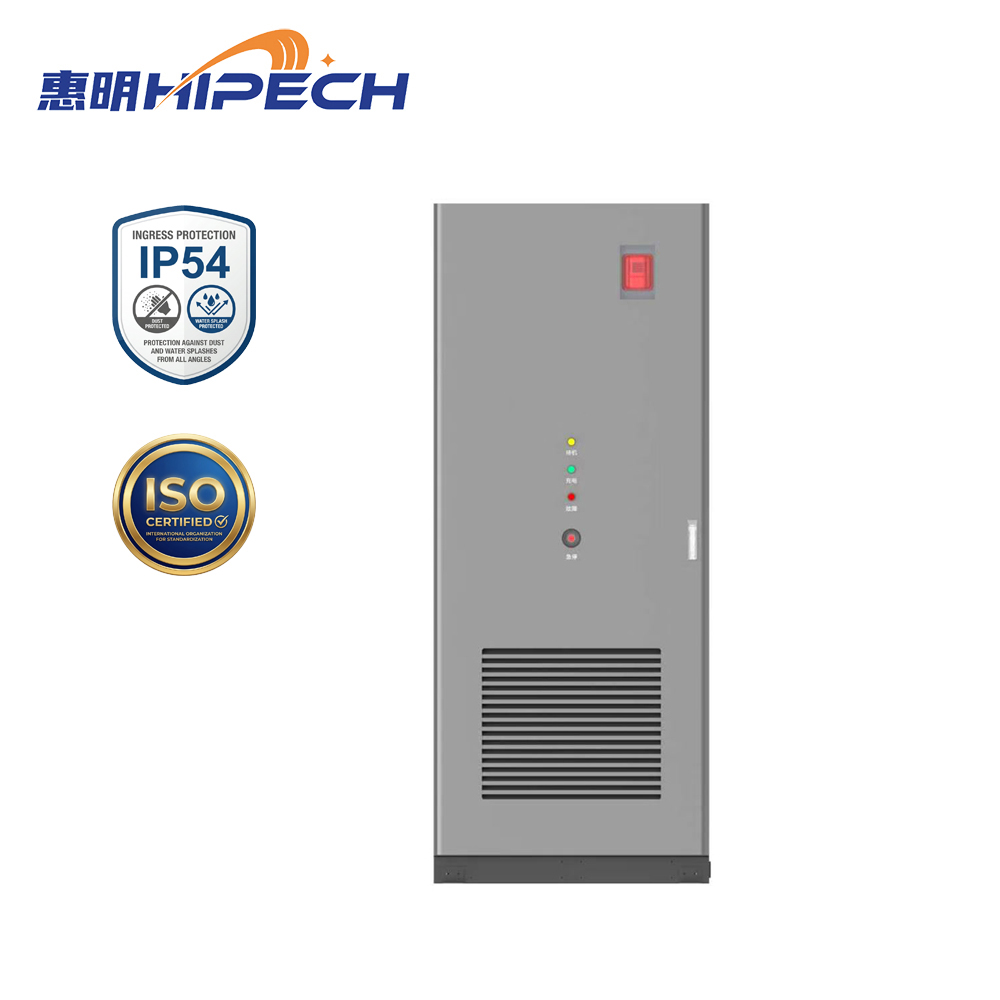
Translating standard ratings into practical asset protection requires field experience. Datasheets often list IP54 or IP65. They might show NEMA 3R or NEMA 4X. These numbers represent survival against wind-driven rain, micro-dust, and snow intrusion. An IP54 cabinet resists basic splashing and limited dust ingress. An IP65 cabinet withstands direct, low-pressure water jets and is completely dust-tight. For true outdoor industrial applications, IP54 is the absolute minimum. IP65 provides vastly superior long-term environmental degradation resistance, especially in agricultural or mining environments where airborne particulates are dense.
Material science dictates enclosure longevity. Standard mild steel rusts quickly outdoors, compromising the structural integrity and allowing water ingress. Manufacturers use galvanized steel or aluminum alloys for superior baseline protection. Specialized anti-corrosion powder coatings elevate this defense. C4 and C5 marine-grade coatings are essential near oceans or heavy chemical plants. These multi-layer paint systems prevent salt and sulfur from reaching the base metal. The enclosure must also feature double-wall insulation to prevent external ambient temperatures from overwhelming the internal thermal management system.
Lithium Iron Phosphate (LFP) has become the undisputed engineering standard. It dominates the industrial BESS cabinet market for specific technical reasons. LFP offers superior thermal stability compared to Nickel Manganese Cobalt (NMC). The thermal runaway threshold for LFP is significantly higher, meaning it requires much more heat to catch fire. If it does fail, it releases less oxygen, making fires easier to suppress and less likely to propagate to adjacent cells. LFP also delivers a substantially longer cycle life. It handles daily deep discharges with minimal capacity fade, easily exceeding 6,000 to 8,000 cycles under proper thermal management.
Air-cooled systems offer distinct simplicity. They use standard HVAC units mounted on the cabinet doors or roof to blow chilled air across battery racks. They are relatively simple to maintain. Field technicians replace standard air filters and check refrigerant levels annually. However, air cooling struggles in high-density configurations. It creates uneven temperature zones. Cells near the AC vent stay cold, while cells in the back corner run hot. This thermal gradient causes uneven wear across the battery bank, forcing the system to derate based on the hottest cell.
Liquid-cooled systems provide superior thermal uniformity. They pump a water-glycol mixture through cold plates directly beneath or between the battery cells. This absorbs heat efficiently at the source. Liquid cooling reduces auxiliary power consumption because circulating pumps use less energy than massive high-velocity fans. It maintains a tight temperature delta of less than 3°C across all cells in the cabinet. This extends lithium-ion cell lifespan significantly, especially in extreme desert climates where ambient temperatures exceed 45°C.
Thermal gradients directly correlate to battery capacity fade. If one module operates 5°C hotter than its neighbor, its internal resistance increases faster. The Battery Management System (BMS) eventually limits the entire rack based on the weakest module to prevent overcharging or deep discharging. Poor thermal management invalidates manufacturer warranties. Liquid cooling mitigates this risk by ensuring every cell operates within optimal temperature parameters, regardless of external weather conditions or heavy charge/discharge cycling.
Navigating NFPA 855 standards is mandatory for commercial deployments. These codes dictate spacing, suppression, and detection requirements for stationary energy storage. UL 9540 and UL 9540A cell-to-system fire testing prove the cabinet's safety. UL 9540A specifically tests thermal runaway propagation. It proves a fire in one cell will not destroy the entire cabinet or spread to adjacent units. Fire marshals demand these test reports before issuing building permits. Without them, the project stops at the plan review stage.
Suppression technologies vary by manufacturer and local code requirements. Aerosol-based systems are common in self-contained cabinets. They flood the enclosure with a fine chemical mist to interrupt the fire's chemical chain reaction at the molecular level. Clean agent gases like NOVEC or FM-200 displace oxygen without leaving residue on sensitive electronics. Some jurisdictions require dry pipe water connections. This allows municipal firefighters to connect a hose and flood the cabinet externally if internal suppression systems fail to contain the event.
Explosion control requires precise mechanical engineering. Deflagration venting is critical. If cells enter thermal runaway, they vent massive amounts of combustible off-gases like hydrogen and carbon monoxide. Pressure builds rapidly inside the sealed cabinet. Deflagration panels are engineered to blow outward at a specific pressure threshold. This directs the blast energy safely upward or outward, preventing catastrophic cabinet rupture. Combustible gas detection sensors trigger alarms, activate exhaust fans, and shut down the system before explosive limits are reached.
The High Voltage (HV) Box and Battery Management System (BMS) act as the system's brain. The BMS monitors individual cell voltage, current, and temperature thousands of times per second. It balances loads across modules to ensure uniform charging and discharging. The HV Box contains the main DC contactors, pre-charge circuits, and fast-acting fuses. It physically disconnects the batteries from the inverter during a ground fault or overcurrent event. These components communicate continuously with site Energy Management Systems (EMS) via Modbus TCP or CAN bus protocols.
Evaluating deployment trade-offs between configurations is essential for site planning. An "All-in-One" cabinet integrates the Power Conversion System (PCS), batteries, BMS, and HVAC in a single footprint. This streamlines installation drastically. You drop it on a concrete pad, land the AC wires on the busbars, and commission the unit. Conversely, modular skids separate the DC batteries from external AC inverters. Skids offer more flexibility for massive utility-scale projects but require extensive on-site DC wiring, trenching, and complex integration between different equipment vendors.
Energy-intensive configurations prioritize duration over raw output. They typically provide 2 to 4 hours of continuous discharge at their rated power. You use these for solar shifting, off-grid resilience, and facility backup. A 100kW/400kWh system is energy-intensive. It discharges slowly over a long period. This matches the needs of a facility trying to ride out a prolonged evening peak pricing window or keep critical servers running during a rolling blackout.
Power-intensive configurations prioritize short bursts of massive energy. They utilize high-discharge systems rated at 1C or higher. A 500kW/500kWh system is power-intensive. It dumps its entire capacity in exactly one hour. You deploy these for frequency regulation, voltage support, and EV charging buffer applications. They intercept sudden, massive load spikes perfectly without requiring massive physical footprints.
System Configuration | Power to Energy Ratio (C-Rate) | Primary Field Applications | Typical Discharge Duration |
|---|---|---|---|
Energy-Intensive | 0.25C to 0.5C | Solar shifting, backup power, load leveling | 2 to 4+ hours |
Power-Intensive | 1C to 2C | EV charging buffer, frequency regulation | 1 hour or less |
Balanced Hybrid | 0.5C to 1C | Demand charge management, microgrids | 1 to 2 hours |
Deploying standardized form factors offers massive operational advantages. Standard blocks like 100kW/200kWh units simplify electrical engineering. You precisely match load requirements by adding identical blocks in parallel. If a facility needs 300kW of output, you install three units. This modularity reduces custom engineering hours and simplifies single-line diagrams. It also simplifies spare parts inventory. Maintenance teams only need to learn one hardware platform, carry one type of air filter, and stock one model of coolant pump.
Daisy-chaining multiple cabinets requires careful AC vs. DC coupling considerations. AC coupling connects each cabinet's internal inverter directly to the facility's main AC switchgear. It is simple and highly redundant. If one cabinet fails, the others keep running independently. DC coupling connects multiple battery cabinets to a single massive central inverter. This is highly efficient for solar integration because it avoids multiple DC-to-AC conversions, but it introduces a single point of failure at the central inverter level.
Navigating the Authority Having Jurisdiction (AHJ) is often the hardest project phase. Local fire marshals hold absolute power over deployments and can halt a project indefinitely. You must proactively address their concerns before submitting the final permit package. Submit comprehensive UL 9540A test reports early. Provide site-specific hazard mitigation analyses (HMA) that detail water supply locations, fire department access routes, and exposure distances to adjacent structures. Show them exactly how the deflagration vents operate. Clear communication prevents months of permitting delays.
Utility interconnection presents another major hurdle. Managing interconnection queue timelines requires aggressive project management. Utilities demand grid-impact studies to ensure your system will not destabilize their local distribution network. Anti-islanding compliance is heavily scrutinized. The utility must know your system will shut down instantly if the grid drops, preventing dangerous back-feed that could electrocute linemen working on the wires. You must submit relay programming settings and protective coordination studies to prove the system isolates safely.
Component lead times can derail entire construction schedules. While the battery cabinet might arrive in twelve weeks, balance-of-system (BOS) components take much longer. Step-up transformers, specialized switchgear, and heavy-duty copper wire often face massive delays. You must procure these items simultaneously with the battery order. Working with an experienced BESS cabinet manufacturer helps secure reliable supply chain channels and ensures all components arrive on site in the correct sequence for the mechanical contractors.
Testing protocols dictate final operational success. Factory Acceptance Testing (FAT) occurs before shipping. The manufacturer tests the BMS, HVAC, and inverters in a controlled environment. Site Acceptance Testing (SAT) happens after installation. SAT is vastly more critical. It includes off-grid islanding tests, load step tests, and communication verification with the site controller. Technicians megger test all power cables, verify phase rotation, and simulate grid loss. Never authorize commercial operation until SAT is fully signed off by all commissioning engineers.
Deploying energy storage requires precise execution and rigorous site planning. Follow these actionable steps to ensure project success:
Audit your facility's 15-minute interval meter data to define exact kW peak shaving targets.
Map out physical footprint constraints and verify local fire code setback requirements before pouring concrete.
Specify liquid-cooled LFP chemistry to maximize cycle life and thermal stability in harsh outdoor environments.
Engage the local fire marshal early with complete UL 9540A documentation and hazard mitigation plans.
Procure long-lead balance-of-system components like transformers concurrently with the battery order.
A: IP54 is the absolute minimum for outdoor use, protecting against wind-blown dust and splashing water. However, IP65 is highly recommended for industrial environments to ensure complete protection against low-pressure water jets, heavy snow, and severe weather degradation.
A: Yes. Modular cabinets allow for easy expansion. Using AC-coupled systems, you can install additional standardized blocks on extended concrete pads and tie them into the existing microgrid controller or facility distribution panel.
A: Liquid cooling provides superior thermal uniformity. It pumps coolant directly under the cells, maintaining a tight temperature delta. This prevents localized hot spots, reduces auxiliary power draw, and significantly extends the battery's operational lifespan.
A: Most commercial cabinets utilize aerosol-based suppression or clean agent gases like NOVEC. These systems interrupt the fire chemically without leaving damaging residue. Many also include dry pipe connections for external fire department water flooding.
A: DC fast chargers pull massive, sudden power spikes that most local grids cannot handle. The battery trickles power from the grid slowly, then discharges rapidly into the vehicle. This intercepts the spike and prevents costly utility infrastructure upgrades.
A: Yes. Due to their extreme weight, they require engineered concrete pads. The pads must account for soil bearing capacity, seismic anchoring requirements, and underground conduit trenching for AC power and communication wiring.