
Views: 0 Author: Site Editor Publish Time: 2025-08-18 Origin: Site
You know that feeling when you watch your battery drop and wonder if you'll make it to the next charging stop? You’re not alone. Many drivers feel the same way. In fact:
69% of electric vehicle owners feel range anxiety on long trips.
9% worry about running out of charge before getting to their destination.
42% get anxious in unfamiliar places.
37% feel uneasy when their battery is lower than expected.
A portable ev charger takes away that worry. You just pack it in your trunk, and you’re ready for anything. These chargers are lightweight and easy to use. Most portable ev chargers work with almost every electric car out there. Whether you travel with family or hit the road alone, you get more freedom and peace of mind. Road trips feel less stressful and a lot more fun when you know you can charge anywhere.
Portable EV chargers let you charge your car anywhere. This makes road trips less stressful. Most chargers are light and simple to use. They work with many electric cars using normal plugs or adapters. Using a portable charger is easy. Plug it into a power source. Then connect it to your car. Watch the charger to make sure it is safe. Portable chargers are good backups in emergencies. They help you avoid waiting a long time or getting stuck. Pick chargers that charge fast and can handle bad weather. Make sure they have safety certifications and work with your car.
A portable ev charger is a handy device that lets you charge your electric car almost anywhere. You don’t have to look for a fixed charging station or worry about running out of power on the road. Just plug it in, and you’re good to go. This type of electric vehicle supply equipment gives you more freedom and flexibility, whether you’re at home, at work, or on a road trip.
You’ll notice that most portable ev chargers are lightweight and easy to carry. Many weigh between 8 and 14 pounds, so you can lift them without much effort. Here’s a quick look at some popular brands and their weights:
| Brand | Weight (lbs) |
|---|---|
| MUSTART | 11.88 - 14.01 |
| BougeRV | 8.18 |
| Morec | 8.8 |
| LEFANEV | 10.53 |
| PRIMECOM | 11.82 |
Some models come with different cable lengths. For example, a 16-foot cable might weigh about 6.4 pounds, while a 26-foot cable can weigh up to 12.8 pounds. You can pick the size that fits your needs.
Most transportable ev chargers have a plug-and-play design. You just connect the charger to a regular outlet (110V-240V), and it starts charging your car. Many chargers also work with adapters, so you can use them with different types of electric cars, like Tesla or models that use the J1772 connector.
Weatherproofing is another key feature. Many chargers have special covers and insulation to protect them from rain, snow, and dust. Some can handle extreme temperatures, from freezing cold to hot summer days. This means you can use your charger outdoors, even in tough weather.
Tip: Always check if your charger has a weatherproof rating before using it outside.
Using a portable ev charger is simple. You plug one end into a power source, like a wall outlet or a heavy-duty extension cord. The other end connects to your car’s charging port. The charger controls the flow of electricity, making sure your car charges safely.
Here’s a chart that shows how charging speeds compare:
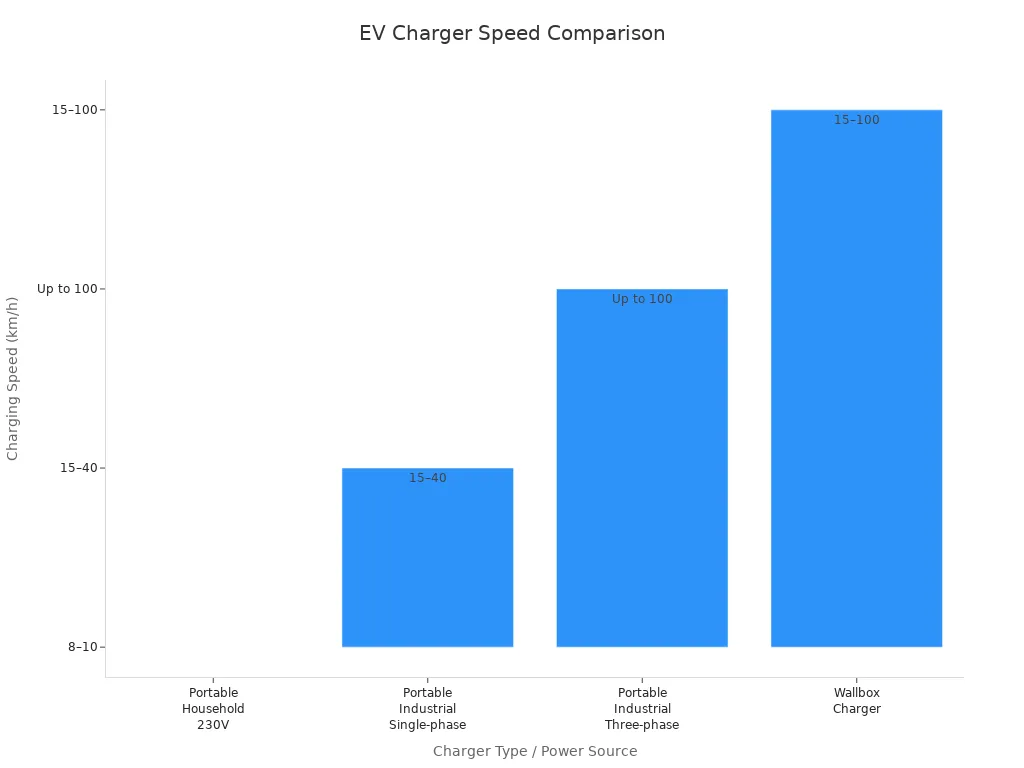
Most portable chargers use Level 1 or Level 2 charging. Level 1 uses a standard household outlet and charges slowly. Level 2 uses a higher voltage and charges your car much faster. Some chargers can even work with industrial outlets for even quicker charging.
With a portable ev charger, you get a reliable way to keep your car powered up, no matter where your journey takes you.
You can go anywhere you want. Portable ev chargers give you real freedom. You do not need to plan every stop. You can charge at home, a friend’s house, or a campsite. Most people charge at home. About 20% of charging happens away from home or at public places. Here are some facts:
About 80% of charging is done at home.
Only 20% happens away from home or at public stations.
Most people use public stations for long trips or emergencies.
Charging at home is easier and costs less than public stations.
Portable ev chargers let you charge almost anywhere. You do not have to worry about finding a station in a new place. Just plug in and keep going.
Sometimes, things do not go as planned. You might take a wrong turn. Maybe the next charging station is broken. A portable ev charger is your backup. You can use it with any normal outlet. You will not be stuck waiting for help. If your battery is low, just use your charger and add more power. This makes you feel safe, especially on long trips or in faraway places.
Level 2 portable ev chargers help a lot in emergencies. Level 1 charging with a regular outlet can take up to 40 hours for a car with a 200-mile range. Level 2 charging with a 240-volt outlet takes about 4 to 8 hours for the same car. You can get back on the road much faster if you use a higher voltage outlet.
| Charger Level | Voltage (AC) | Typical Charging Time for BEV to 80% | Typical Charging Time for PHEV | Typical Power Output | Typical Locations |
|---|---|---|---|---|---|
| Level 1 | 120 V | 40-50+ hours | 5-6 hours | ~1 kW | Home |
| Level 2 | 208-240 V | 4-10 hours | 1-2 hours | 7-19 kW | Home, Workplace, Public |
Tip: Always check if your destination has the right outlet. If you carry a portable ev charger, you are ready for anything.
You do not want to worry if your charger fits your car. Most portable ev chargers use the J1772 standard. This works with almost every non-Tesla electric car in North America. That includes Ford, Nissan, Chevrolet, BMW, Hyundai, and Kia. If you have a Tesla, you can use an adapter to connect to a J1772 charger. This means you can share your charger with friends or family, no matter what they drive.
Portable ev chargers work with different outlets. Many come with adapters. You can plug into a normal wall outlet or a stronger socket. Weatherproof chargers let you charge inside or outside, even in rain or snow. Long cables give you more choices, so you do not have to park right next to the outlet.
You want your trip to be fun, not stressful. Portable ev chargers help you relax and enjoy your trip. You know you have a backup if a station is busy or broken. You can charge at your hotel, a friend’s house, or a rest stop. You do not have to worry about running out of power far from help.
Families like portable ev chargers because home charging is easy, even if you rent or do not have a fixed station. People who travel alone or love the outdoors use them for camping and trips, where public stations might be far away. Businesses like car dealerships and hotels use portable chargers to help customers and guests charge their cars without building new stations.
Here is a quick look at how different people use portable ev chargers:
| User Group | Common Use Cases and Features |
|---|---|
| Families | Easy home charging for many EVs; saves money; good for renters |
| Solo Travelers | Portable chargers with adapters; easy to carry; great for trips and outdoor fun |
| Business Users | Car dealerships, hotels, and service stations use portable chargers for flexible charging and better customer service |
With a portable ev charger, you always have a solution in your trunk. You can focus on your adventure, not the next charging stop.
Charging your EV on the go feels easy when you know what to do. Here’s a simple step-by-step guide to help you use a portable electric car charger:
Find a safe spot to park. Make sure your car is away from traffic and parked on a flat surface.
Check your charger and cables. Look for any damage or loose connectors before you start.
Plug the charger into the power source. Use a regular wall outlet for Level 1 charging or a 240V outlet for faster Level 2 charging.
Connect the charger to your car’s charging port. Push the connector in until it clicks.
Turn on the charger. Watch for indicator lights or check your app to make sure charging has started.
Monitor the charging process. Many chargers have displays or apps that show progress. Some even send alerts when charging is done.
Unplug and store the charger. When you finish, turn off the charger, disconnect it from your car, and put everything away safely.
Tip: A portable electric car charger with Level 2 capability can add about 25 to 30 miles of range per hour. This helps you get back on the road much faster than Level 1 charging.
You want every charge to be safe and smooth. Keep these tips in mind:
Always use a charger with safety certifications like ETL or UL. Look for these marks on the product’s nameplate, not just on the box or website.
Avoid using chargers with only a CE mark in North America. These do not guarantee independent safety testing.
Never use a charger or cable that looks damaged or has frayed wires.
Keep cables away from wheels and moving parts to prevent accidents.
Charge in dry, well-ventilated areas. Do not use your portable electric car charger in heavy rain or standing water.
Use quality extension cords if needed, but make sure they match the charger’s power rating.
Plan your charging stops ahead of time, especially for long trips or remote areas.
Note: Certified chargers lower the risk of electrical problems and make sure you meet local safety codes.
Imagine you pack up the car for a family road trip. You plan your stops, but sometimes things change. Maybe you take a detour to see a cool landmark or get stuck in traffic. Suddenly, your battery drops lower than you expected. You start to worry about finding the next charging station. With portable ev chargers, you do not have to panic. You just pull out your charger and plug in at a friend’s house or a roadside outlet. Many families say this backup gives them peace of mind. You can keep the kids happy and avoid long waits at crowded public charging stations.
“We took a wrong turn and ended up far from any charging station. Our portable charger saved the day and kept our trip on track!” – A happy parent
You love exploring new places on your own. Sometimes, you forget to charge before you leave or you find that the nearest charging station is out of order. In Broward County, FL, drivers have used mobile emergency charging services when they run out of battery or take unexpected detours. Technicians bring portable chargers right to your car. This service is faster and safer than towing. You get back on the road quickly, and you do not have to worry about damage to your vehicle. Many drivers say these portable chargers are reliable and convenient, especially when you face unexpected battery depletion.
No need to wait for a tow truck
Quick on-site charging
Lower costs and less stress
Traveling through remote highways or rural towns can feel risky if you drive an electric car. Sometimes, you cannot find a charging station for miles. Portable ev chargers help you charge wherever you find a power source. Some new chargers even use solar panels or wind turbines, so you do not need the electrical grid. This technology lets you charge in places with no traditional charging station. You get more freedom and less range anxiety. You can explore new places and know you have a backup plan.
Portable chargers support sustainable travel and help more people enjoy electric vehicles, even far from the city.
When you shop for the best portable ev chargers, you want to make sure you get the right features for your needs. Here are the most important things to check:
Charging Speed: Look for chargers that offer fast charging, like those with up to 32 amps. Faster charging means less waiting on your trip.
Compatibility: Make sure the charger works with your car’s charging port. Most EVs use J1772 or NACS connectors.
Durability: Pick a charger that can handle outdoor use. Weather resistance and strong build quality help your charger last longer.
Portability: Choose a lightweight and compact charger. You want something easy to carry and store in your trunk.
Tip: Always check if the charger comes with adapters for different outlets or car models.
Power ratings and cable length make a big difference in how easy and fast you can charge. Level 1 chargers usually give you 3 to 5 miles of range per hour. If you want more speed, look for Level 2 chargers with higher amperage, like 16 or 32 amps. These can charge your car much faster and still work with many home outlets.
Cable ratings matter for safety and speed. Higher ratings, like 32 amps, let you charge faster.
Cable length affects where you can park and charge. Most cables are 16 to 25 feet long. Longer cables give you more options but can be harder to manage.
Safety features like overcurrent and overvoltage protection keep you and your car safe.
You want a charger that keeps you safe and works every time. Look for safety certifications like ETL or UL. Avoid unbranded or low-quality chargers. Trusted brands, such as HMHIPECH, offer reliable products with strong warranties.
Here’s a quick look at price ranges for the best portable ev chargers:
| Charger Model | Price Range | Category | Key Features / Notes |
|---|---|---|---|
| ShockFlo Level 1-2 EV Charger | Around $160 | Budget-friendly | 16 amps, IP65 waterproofing |
| Schumacher SC1455 | Under $200 | Budget-friendly | Level 1 & 2, 28-ft cable |
| MUSTART Level 2 Portable EV Charger | $299 - $359 | Budget-friendly | 40 amps, IP67 waterproof, digital display |
| J+ Booster 2 Portable Level 2 | Around $570 | Premium | Up to 40 amps, IP67 waterproof, lightweight |
You can find these chargers online, at big retailers, or directly from trusted brands. Some buyers even qualify for government rebates or tax credits, which can help lower the cost. Always check for the latest deals and incentives before you buy.
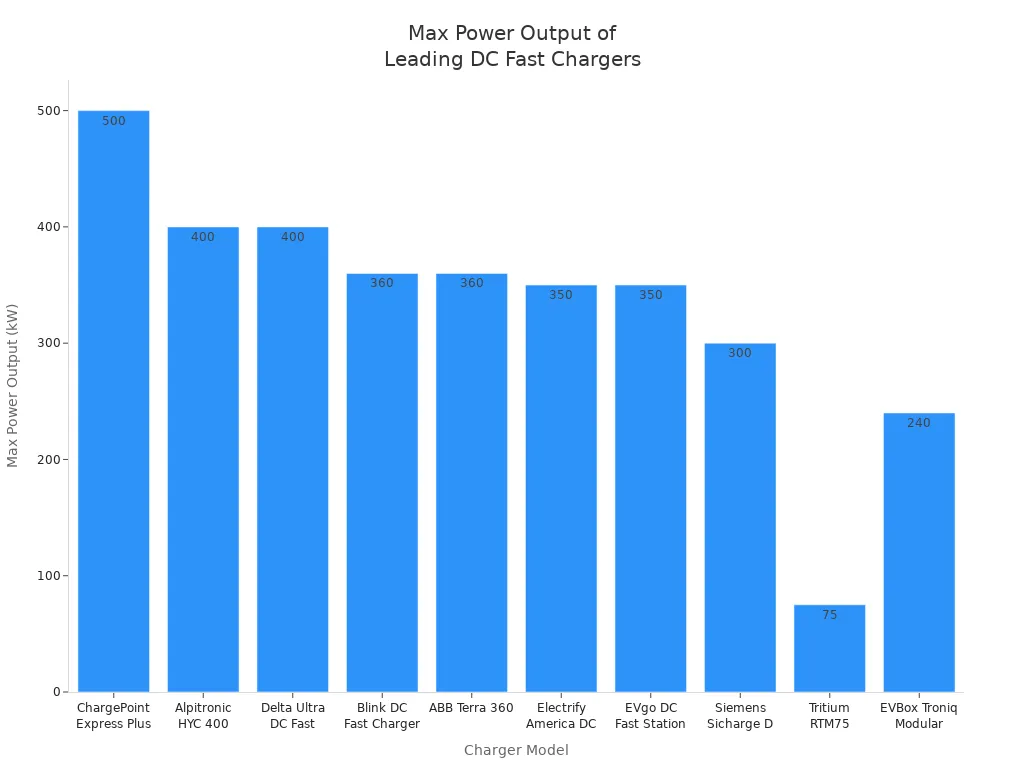
If you want to charge your EV fast, portable DC fast chargers help a lot. These chargers give your car a lot of power in a short time. Some models can go up to 360 kW or even higher. This means you can add many miles to your battery in just minutes. The best chargers can give you 20 miles of range for every minute you charge. You do not have to wait long to get back on the road.
Here are some top portable DC fast chargers and how much power they give:
| Charger Model | Manufacturer | Maximum Power Output (kW) |
|---|---|---|
| ChargePoint Express Plus | ChargePoint, USA | Up to 500 kW |
| Alpitronic Hypercharger HYC 400 | Alpitronic, Italy | Up to 400 kW |
| Delta Ultra DC Fast Charger | Delta, Taiwan | Up to 400 kW |
| Blink DC Fast Charger | Blink, USA | Up to 360 kW |
| ABB Terra 360 | ABB, Switzerland | Up to 360 kW |
| Electrify America DC Fast Charger | Electrify America, USA | Up to 350 kW |
You can use these chargers at big events, in emergencies, or when you need a quick charge. They are great for people who want both speed and flexibility.
Many companies use mobile electric vehicle chargers to keep their vehicles ready. Delivery services, rental car companies, and event workers all need fast charging to avoid waiting. You might see these chargers at concerts, sports games, or even at ports and train yards. They help shuttle buses, delivery vans, and other vehicles stay charged.
Here are some ways businesses use these chargers:
Delivery fleets charge in faraway places to save time.
Event workers help shuttle buses and guest cars without building new stations.
Rental fleets use mobile chargers to get cars ready fast.
Emergency teams use them to keep vehicles running during power outages.
Mobile electric vehicle chargers give you more choices. You do not need to build a charging station that stays in one place. You can move the charger to where it is needed most. This saves money and helps you handle busy times or special events.
Stationary DC fast chargers are the fastest, but they must stay in one spot and need special setup. Mobile chargers may not be as fast, but you can use them almost anywhere. You get both speed and freedom.
You want your road trip to be safe and simple. Portable EV chargers let you charge your car anywhere. You do not have to worry about getting stuck. These chargers have safety features to keep you safe. They stop charging when your battery is full. They protect against getting too hot. They work in bad weather like rain or snow.
You can use them even if it is raining or snowing.
Safety certifications and warranties help you feel calm.
You can charge your car at any stop, not just special stations.
Bring a portable charger, and your trip will be more fun and flexible. ⚡
You can use a portable EV charger almost anywhere with a standard outlet. Always check the outlet type and make sure it matches your charger. Some chargers need a 240V outlet for faster charging.
Charging time depends on your charger and outlet. Level 1 chargers add about 3-5 miles per hour. Level 2 chargers can add 25-30 miles per hour. You get back on the road faster with Level 2.
Most portable EV chargers use the J1772 connector. You can use an adapter for Tesla vehicles. Always check your car’s charging port before you buy a charger.
Many portable EV chargers have weatherproof designs. You can use them in rain or snow. Always check for safety certifications like ETL or UL. Store your charger indoors when not in use for extra protection.